No products in the cart.
Beeswax candle making can feel like it requires more expertise than it actually does. With the right setup and a few solid habits, it's one of the most satisfying things you can make at home.
Beekind co-founder Doug has been hand-pouring 100% beeswax candles here in Sebastopol for decades, and what he's learned comes down to a handful of fundamentals that any beginner can follow.
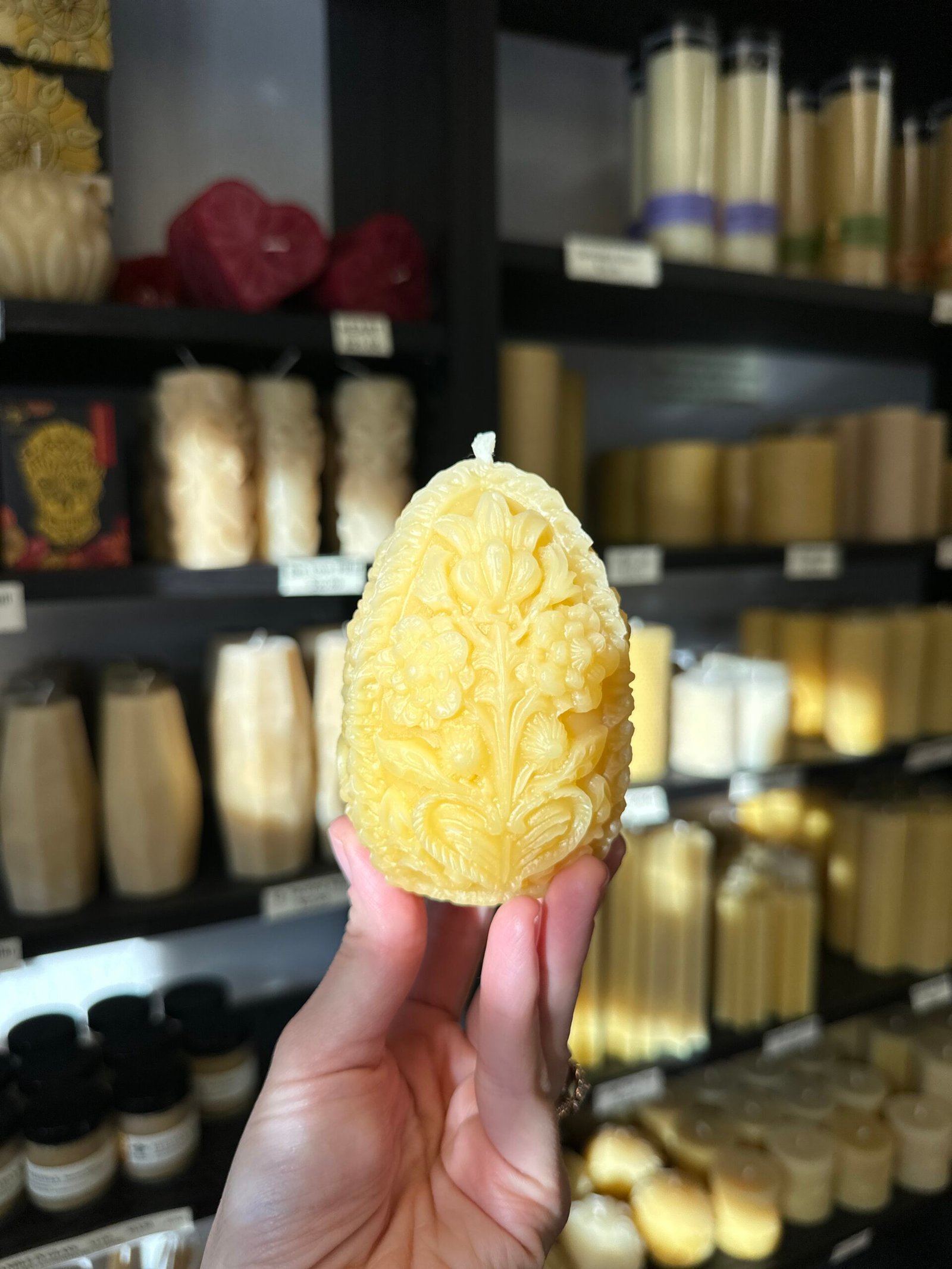
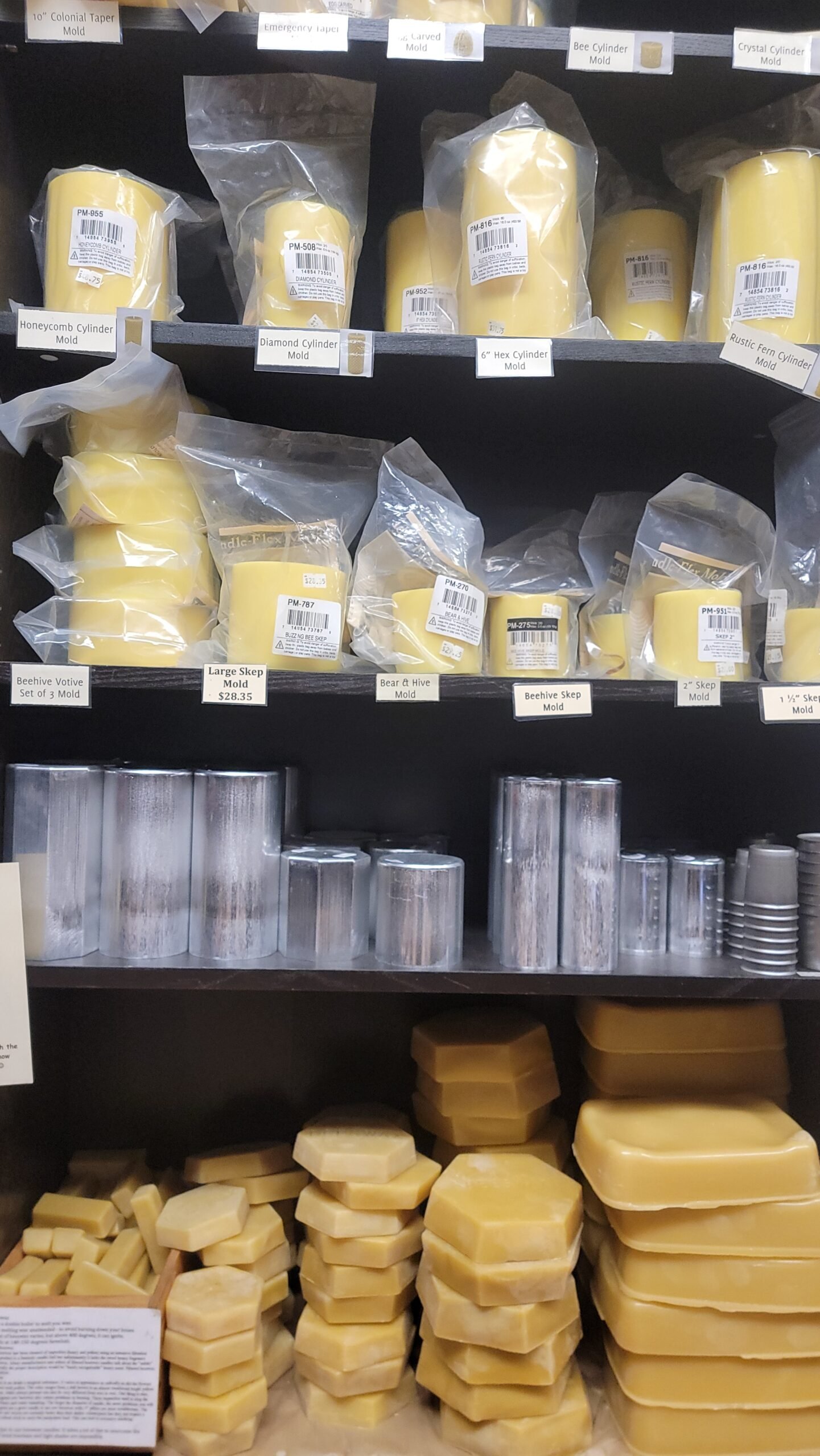
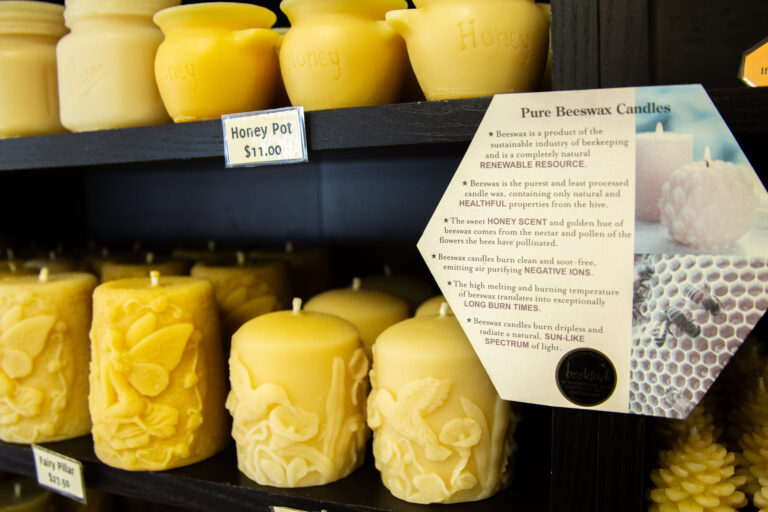
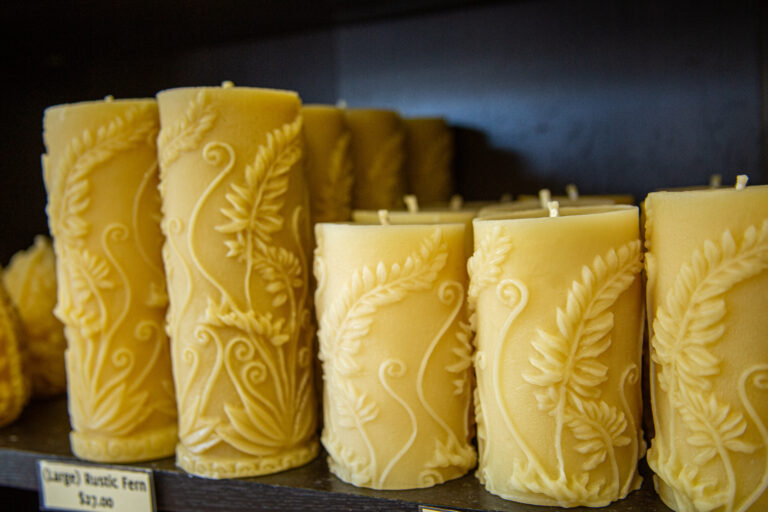
Most candles are made from paraffin, a petroleum byproduct. Beeswax is different. It's entirely natural, burns clean, and produces no toxic byproducts. But the reason most people fall in love with it is simpler than that: the scent. Beeswax carries honey fragrance naturally! Our 100% pure beeswax blocks come from California beehives, and like a good wine and good honey, the character varies with the season, the flowers, and the bees. No two batches are exactly the same.
Highly Filtered Beeswax
Highly filtered beeswax has been cleaned of impurities (honey and pollen) using an intensive filtration system. The end product is a fantastic candle fuel but has significantly less of the sweet honey fragrance found in raw beeswax. Pure beeswax pellets are easy to measure, but don't smell like much. Filtered beeswax can be white or yellow.
Unrefined Beeswax
Unrefined beeswax is no doubt a magical substance. It varies in appearance as radically as did the flowers from which the bees took pollen. The color ranges from a dull brown to an almost translucent bright yellow and the honey scent, while always present can also be very different from wax to wax. One thing is sure, what makes for highly fragrant raw beeswax also causes problems in burning. These impurities tend to clog the wick, weaken the flame and cause tunneling. The larger the diameter of candle, the more problems you will encounter. 7/8" Tapers are a great candle to use raw beeswax with; 3" pillars are more troublesome. The very lightest yellow raw waxes are certainly better than their darker counterparts but they too require a much larger, more robust wick to carry the particulate load. This can lead to excessive smoking.
When using dye in beeswax candles: It takes a lot of dye to overcome the yellow color of most beeswax and light shades are impossible.
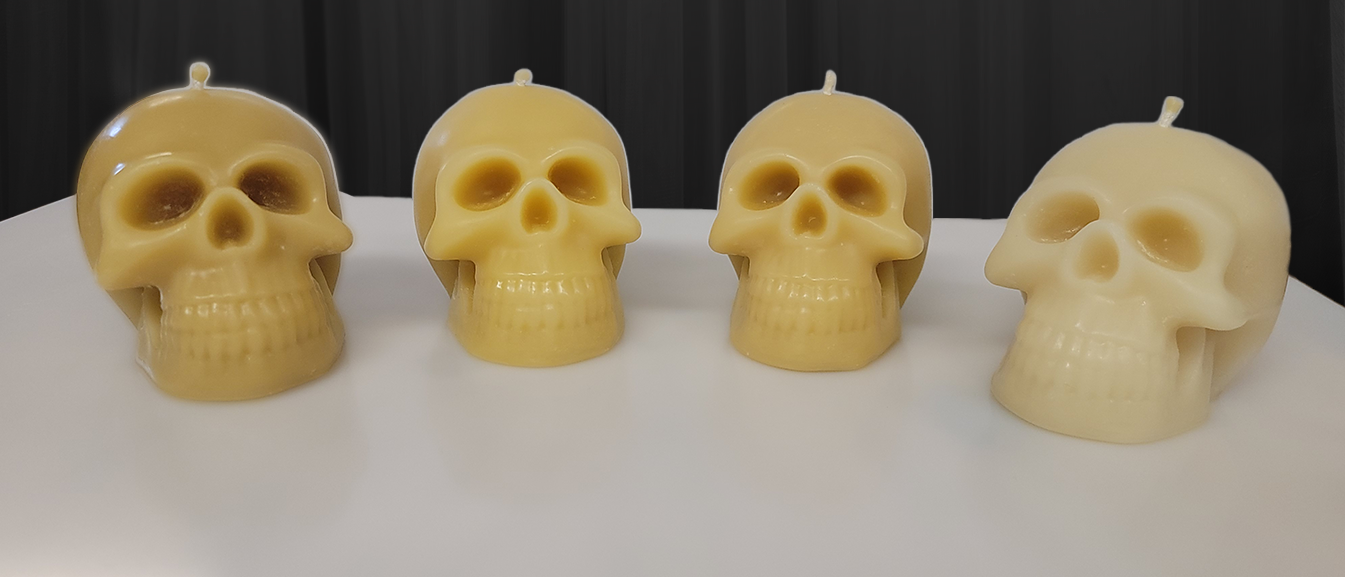
You don't need much to get started with DIY beeswax candles. Here's the core equipment:
A double boiler. This is non-negotiable. Beeswax should never be melted directly over a flame or on a bare burner, always use a double boiler to control heat. This can be as simple as placing a melting pot inside a pot of water. More on why this matters below.
Molds. Three main options to know:
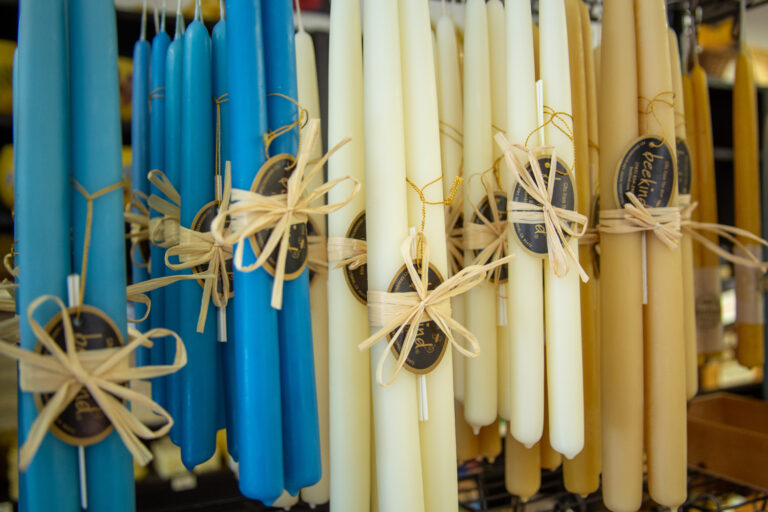
Wicks. Use 100% cotton square braided wicks for all beeswax candles. Beeswax requires a larger wick than other waxes, and you'll want to avoid anything with lead or zinc. (All of ours are free from both.) For sizing specifics, see our wick guide (coming soon!)
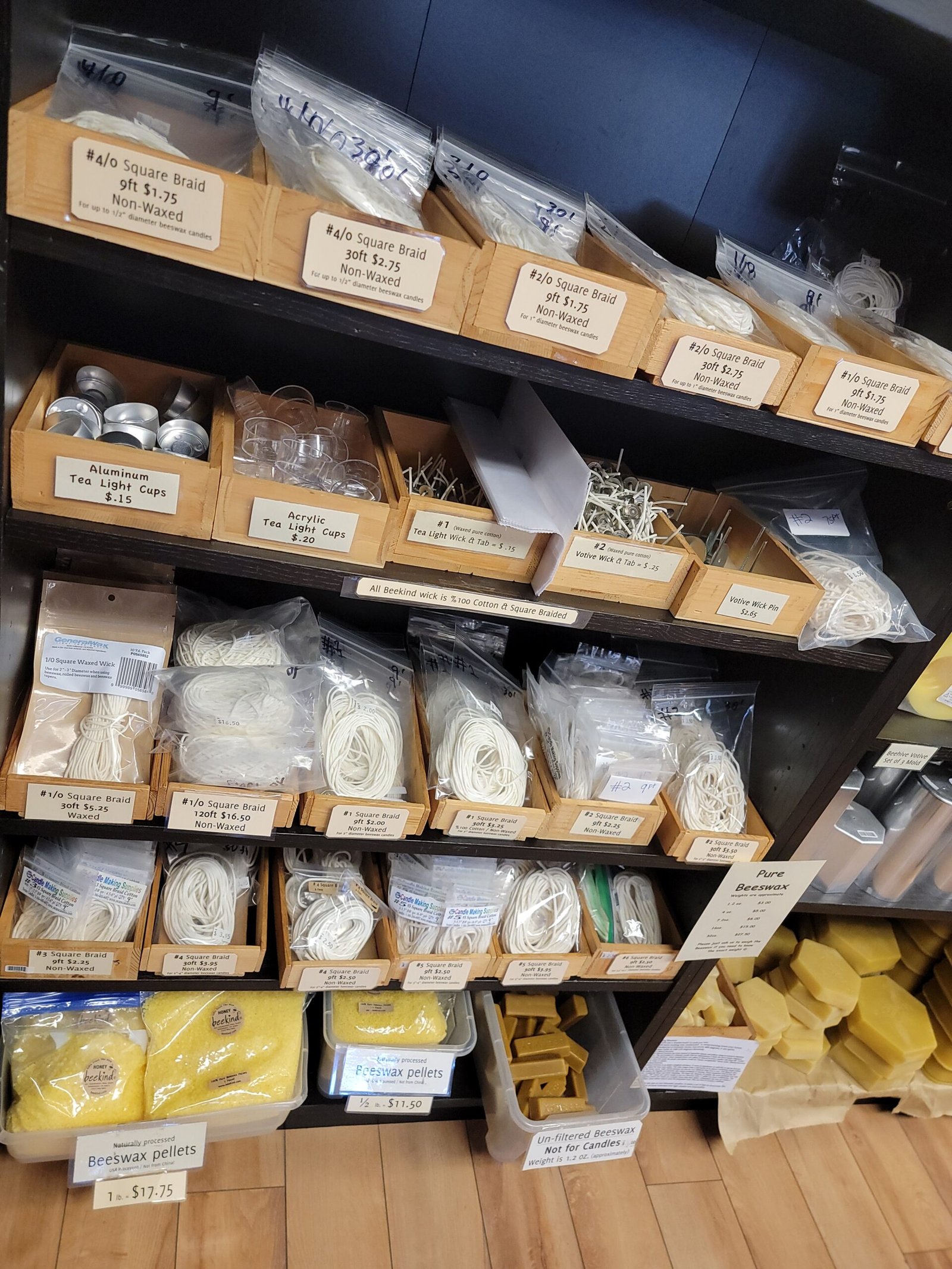
Never leave melting wax unattended.
Beeswax melts at 148–150°F, but above 400°F, it can ignite. With a proper double boiler, getting to that point takes real negligence, but wax left alone on a heat source can overheat faster than you'd expect. Stay close to your wax, and keep an eye on the thermometer.
Beeswax has a forgiving window, but two numbers are worth knowing before you pour:
Melt point: 148–150°F. Wait until the wax is fully liquid before moving on.
Pour temperature: 160–165°F. This is the sweet spot for pouring into molds. A candy or wax thermometer keeps you in range without any guesswork.
For making a beeswax candles without a thermometer, keep a close eye as you melt the wax. Once the wax is fully liquid, let it cool until it's just about to solidify. You'll see a thin layer forming at the edges of your pot and on the surface of the pool. That's your signal. Pouring at that moment gives you the best results.
Rolled beeswax candles are the easiest entry point in the craft: no melting, no molds, no thermometer needed. This is the easiest method to produce a beautiful candle in under five minutes.
→ How to Make Rolled Beeswax Candles
Everything you need for your first candle is here at Beekind: pure beeswax, square braided wicks, and a few good tools, sourced simply and smart.
Part of our candle making series: How to Choose the Right Wick (Coming Soon - July 2026)| How to Make Rolled Beeswax Candles