No products in the cart.
Most candle problems trace back to one thing: the wick.
Too big, and your candle smokes. Too small, and the flame digs a narrow tunnel through the center, leaving thick walls of unmelted wax, or the wick drowns entirely, flooded by its own melt pool.
The wick is the heart of the candle, and yet it's almost always the last thing people think about. This guide is here to change that.
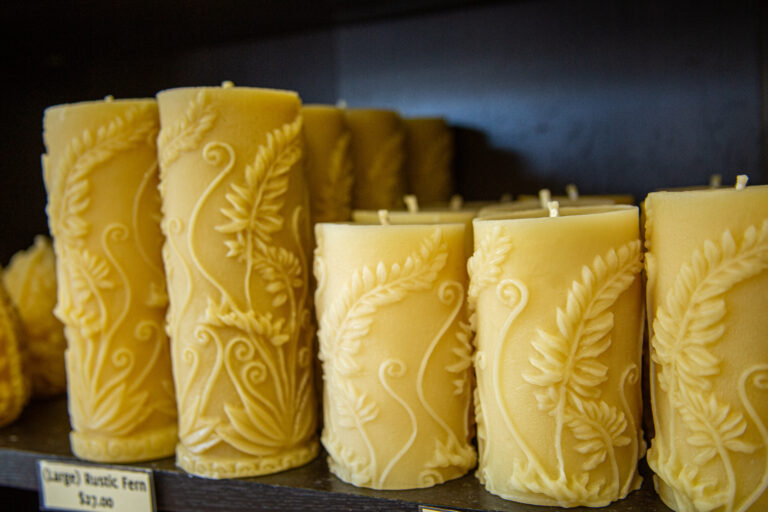
Beeswax isn't like paraffin or soy. It's denser, with a higher melt point, and it produces a brighter, longer-burning flame. But that density means the wick has to work harder to draw fuel up from the melt pool, so beeswax candles consistently require a larger wick than candles made from other waxes.
The right choice is square braided wick, which is closer to the shape of a flame than a flat braid. It curls slightly as it burns, which helps it self-trim and keeps the flame steady over time. We use it in all our hand-poured candles here in Sebastopol, and it's what we recommend across the board.
Before you size anything, make sure your wick is actually safe to burn. Some wicks (particularly older or low-cost varieties) contain lead or zinc cores, which release metal particulates into the air when burned.
There's a simple way to check. Press the wick against a piece of paper and drag it firmly across the surface with your finger. If it leaves a mark like a pencil, it likely contains lead or zinc. You don't want to burn that.
All of our square-braided wicks are 100% cotton, lead-free and zinc-free.
Candle diameter is the key variable. The wider the candle, the larger the wick needed to sustain a full, even melt pool.
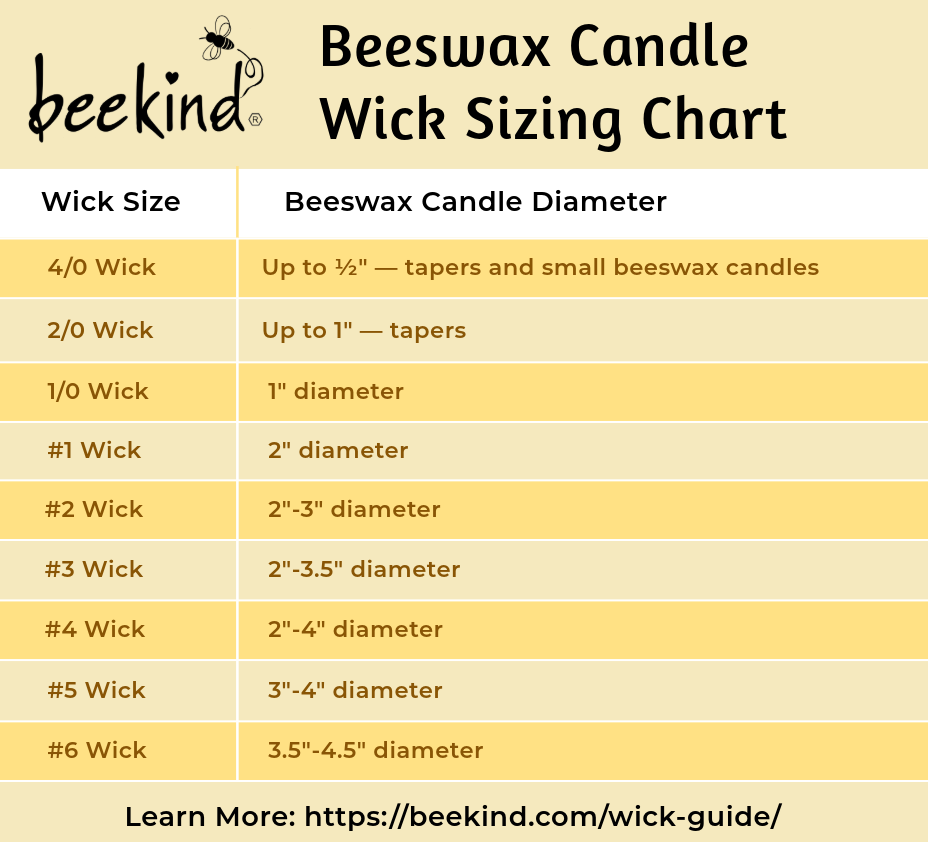
One caveat worth knowing: a larger wick consumes wax faster, which means shorter burn times and a higher chance of dripping. The goal isn't the biggest wick, it's the right one.
Your candle will show you when something's off. Here's how to read it when troubleshooting handmade beeswax candles.
If it smokes, the wick is too big. More flame than the wax can cleanly fuel produces soot. Size down. This can also happen due to poorly filtered wax.
If it tunnels, burning a narrow channel straight down while the outer wax stays solid, the wick is too small. The flame can't generate enough heat to reach the edges, so the wax never fully pools. Left long enough, the wick may sink below the wax line and drown, or burn a hole in the candle wall and drip.
The chart above assumes reasonably well-filtered beeswax. If you're working with unrefined or raw wax, things get a little more complicated.
Raw beeswax carries honey, pollen, and natural color; it's what gives it that genuine honey fragrance that heavily filtered wax loses. But too much of those same impurities also clog the wick over time. A clogged wick draws fuel less efficiently, weakening the flame and causing tunneling. To compensate, you may need to size up... which then risks smoking. It's a narrow window.
Lighter-colored raw waxes tend to behave better than darker ones, but even the cleanest raw wax carries enough particulate to demand a more robust wick. For smaller candles — 7/8" tapers — this tradeoff is manageable. For larger pillars, it becomes harder to control.
If you're stuck in a cycle of smoking when you go up and tunneling when you go down, look at your wax before you reach for a different wick. Better filtration is often the answer.
We carry 100% cotton, square braided wicks in every size on this chart — all lead-free, zinc-free, and sized for beeswax.
[→ Shop square braided wicks by size]
_Part of our candle making series. See also: The Beginner's Guide to Making Beeswax Candles, How to Make Rolled Beeswax Candles